
Agriculture
Providing power for lighting and irrigation systems
Lighting system:
In greenhouses, artificial lighting is sometimes needed to supplement the lack of natural light, especially on cloudy days, at night or in winter when the daylight hours are short. Solar panels can provide power for lighting equipment such as LED plant growth lights to ensure that plants can get enough light for photosynthesis.
LED plant growth lights can adjust the intensity, wavelength and time of light according to the growth needs of different plants to promote the growth and development of plants. For example, for leafy plants, the proportion of blue light can be increased to promote leaf growth; for flower and fruit plants, the proportion of red light can be increased to promote flower bud differentiation and fruit ripening.
Irrigation system:
The irrigation system in the greenhouse needs to consume a certain amount of electricity to drive water pumps, solenoid valves and other equipment. Solar panels can provide a stable power supply for the irrigation system, realize automatic irrigation, and save labor costs.
The automatic irrigation system can automatically adjust the irrigation time and water volume according to the data of equipment such as soil moisture sensors and meteorological sensors to improve the utilization efficiency of water resources. For example, when the soil moisture is lower than the set value, the automatic irrigation system will start the water pump for irrigation; when the soil moisture reaches the set value, the automatic irrigation system will stop irrigation to avoid wasting water resources.
2. Provide suitable light conditions for plants
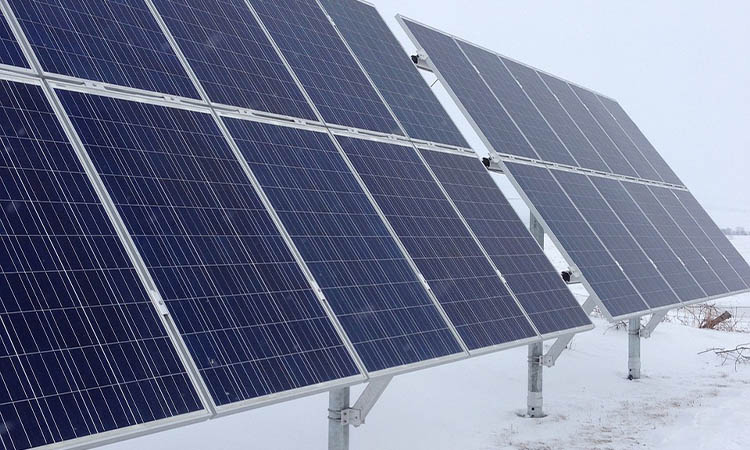
Adjust light intensity:
Solar panels can block part of the sunlight to a certain extent and adjust the light intensity in the greenhouse. When the sunlight is strong in summer, solar panels can reduce excessive light to prevent plants from being sunburned; when the sunlight is weak in winter, solar panels can reflect part of the sunlight to increase the light intensity in the greenhouse.
By adjusting the light intensity, plants can obtain suitable light conditions at different growth stages to promote plant growth and development. For example, in the seedling stage of plants, weaker light intensity is required to avoid sunburn of seedlings; in the vigorous growth period of plants, stronger light intensity is required to promote plant photosynthesis.
Adjust light wavelength:
Solar panels of different colors can absorb and reflect light of different wavelengths, thereby adjusting the light wavelength in the greenhouse. For example, blue solar panels can absorb and reflect blue light, and red solar panels can absorb and reflect red light.
By adjusting the wavelength of light, the needs of different plants for light wavelength can be met. For example, for leafy plants, the proportion of blue light can be increased to promote leaf growth; for flower and fruit plants, the proportion of red light can be increased to promote flower bud differentiation and fruit ripening.